 HitLight
CLF Lighting LEDwash XL
DMX-Tabelle, 7 DMX-Modi und eine 3D-Vorschau. 3 / 4 / 5 / 6 / 8 / 12 / 16 DMX-Kanäle.
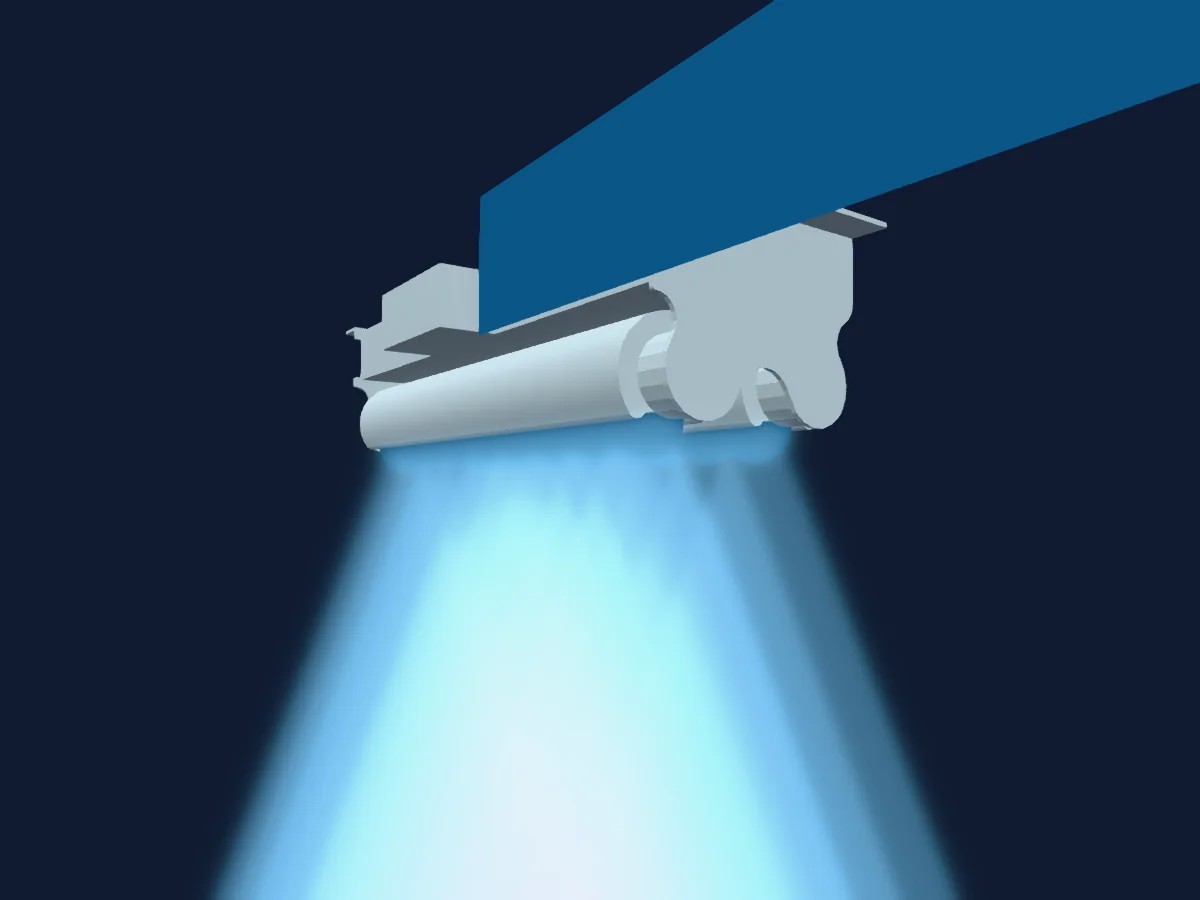
Was er kann
- Zusätzliche LED-Farben
- Farbton und Sättigung
- RGB-Farbmischung
- Farbtemperatur
- Farbrad
- Strobe
- Dimmer
- Pixelsteuerung
Sicherheitsrelevante Funktionen: Eingebaute Effektprogramme. Prüfe vor einer Show, wie sie sich an deinem eigenen Scheinwerfer verhalten.
DMX-Modi und Kanaltabellen
| Modus | Kanäle | In HitLight |
|---|---|---|
| 3 Channel mode | 3 | Bereit in HitLight |
| 4 Channel mode | 4 | Bereit in HitLight |
| 5 Channel mode | 5 | Bereit in HitLight |
| 6 Channel mode | 6 | Bereit in HitLight |
| 8 Channel mode | 8 | Bereit in HitLight |
| 12 Channel mode | 12 | Bereit in HitLight |
| 16 Channel mode | 16 | Bereit in HitLight |
3 Channel mode
Bereit in HitLight3 DMX-Kanäle · Diese Tabelle als CSV herunterladen
| Kanal | Funktion | Standard | DMX-Werte |
|---|---|---|---|
| 1 | H SBHue | 0 | 0–255 |
| 2 | H SBSaturation | 0 | 0–255 |
| 3 | H SBBrightness | 0 | 0–255 |
4 Channel mode
Bereit in HitLight4 DMX-Kanäle · Diese Tabelle als CSV herunterladen
| Kanal | Funktion | Standard | DMX-Werte |
|---|---|---|---|
| 1 | Red | 255 | 0–255 |
| 2 | Green | 255 | 0–255 |
| 3 | Blue | 255 | 0–255 |
| 4 | White | 0 | 0–255 |
5 Channel mode
Bereit in HitLight5 DMX-Kanäle · Diese Tabelle als CSV herunterladen
| Kanal | Funktion | Standard | DMX-Werte |
|---|---|---|---|
| 1 | Dimmer | 0 | 2 Wertebereiche
|
| 2 | Red | 255 | 0–255 |
| 3 | Green | 255 | 0–255 |
| 4 | Blue | 255 | 0–255 |
| 5 | White | 0 | 0–255 |
6 Channel mode
Bereit in HitLight6 DMX-Kanäle · Diese Tabelle als CSV herunterladen
| Kanal | Funktion | Standard | DMX-Werte |
|---|---|---|---|
| 1 | Dimmer | 0 | 2 Wertebereiche
|
| 2 | Red | 255 | 0–255 |
| 3 | Green | 255 | 0–255 |
| 4 | Blue | 255 | 0–255 |
| 5 | White | 0 | 0–255 |
| 6 | Shutter / Strobe | 0 | 21 Wertebereiche
|
8 Channel mode
Bereit in HitLight8 DMX-Kanäle · Diese Tabelle als CSV herunterladen
| Kanal | Funktion | Standard | DMX-Werte |
|---|---|---|---|
| 1 | Red | 255 | 0–255 |
| 2 | Green | 255 | 0–255 |
| 3 | Blue | 255 | 0–255 |
| 4 | White | 0 | 0–255 |
| 5 | Red | 255 | 0–255 |
| 6 | Green | 255 | 0–255 |
| 7 | Blue | 255 | 0–255 |
| 8 | White | 0 | 0–255 |
12 Channel mode
Bereit in HitLight12 DMX-Kanäle · Diese Tabelle als CSV herunterladen
| Kanal | Funktion | Standard | DMX-Werte |
|---|---|---|---|
| 1 | Dimmer | 0 | 2 Wertebereiche
|
| 2 | Red | 255 | 0–255 |
| 3 | Green | 255 | 0–255 |
| 4 | Blue | 255 | 0–255 |
| 5 | White | 0 | 0–255 |
| 6 | Shutter / Strobe | 0 | 21 Wertebereiche
|
| 7 | Dimmer | 0 | 2 Wertebereiche
|
| 8 | Red | 255 | 0–255 |
| 9 | Green | 255 | 0–255 |
| 10 | Blue | 255 | 0–255 |
| 11 | White | 0 | 0–255 |
| 12 | Shutter / Strobe | 0 | 21 Wertebereiche
|
16 Channel mode
Bereit in HitLight16 DMX-Kanäle · Diese Tabelle als CSV herunterladen
| Kanal | Funktion | Standard | DMX-Werte |
|---|---|---|---|
| 1 | Dimmer | 0 | 2 Wertebereiche
|
| 2 | Red | 255 | 0–255 |
| 3 | Green | 255 | 0–255 |
| 4 | Blue | 255 | 0–255 |
| 5 | White | 0 | 0–255 |
| 6 | Shutter / Strobe | 0 | 21 Wertebereiche
|
| 7 | Dimmer | 0 | 2 Wertebereiche
|
| 8 | Red | 255 | 0–255 |
| 9 | Green | 255 | 0–255 |
| 10 | Blue | 255 | 0–255 |
| 11 | White | 0 | 0–255 |
| 12 | Shutter / Strobe | 0 | 21 Wertebereiche
|
| 13 | Color Effects2 | 0 | 0–255 |
| 14 | C TC | 0 | 2 Wertebereiche
|
| 15 | Color Macro1 | 0 | 21 Wertebereiche
|
| 16 | Color Macro1Rate | 0 | 3 Wertebereiche
|
CLF Lighting LEDwash XL in HitLight verwenden
- Öffne Scheinwerfer hinzufügen und suche nach CLF Lighting LEDwash XL.
- Wähle den DMX-Modus, der im Menü des Scheinwerfers eingestellt ist. HitLight gibt ihm die niedrigste freie Startadresse in seinem Universum, die zur Kanalzahl des Modus passt.
- Prüfe Modus und Steuerung an deinem echten Scheinwerfer, bevor du ihn live einsetzt.
Ähnliche Scheinwerfer
LED-Bar
CLF Lighting LEDBar Pro
4 / 6 / 8 / 11 / 12 / 47 DMX-Kanäle
PAR
CLF Lighting Dynamic White PAR
3 / 4 / 7 DMX-Kanäle
Moving Head
CLF Lighting SoftLED200 VW
2 / 3 / 5 DMX-Kanäle
Nebelmaschine
CLF Lighting EF Smoke 3100
11 DMX-Kanäle
PAR
CLF Lighting CLF Colour Par 12
5 DMX-Kanäle
Moving Head
CLF Lighting SERA Batt
2 / 3 / 4 / 6 / 8 / 10 / 12 / 13 / 29 DMX-Kanäle
Die Tabellen stammen aus der GDTF-Beschreibung des Scheinwerfers, umgewandelt für die HitLight-Bibliothek. HitLight ist nicht mit CLF Lighting verbunden.