 HitLight
Clay Paky Mini-B Spot
Tabela DMX, 1 modo DMX e prévia em 3D. 18 canais DMX.
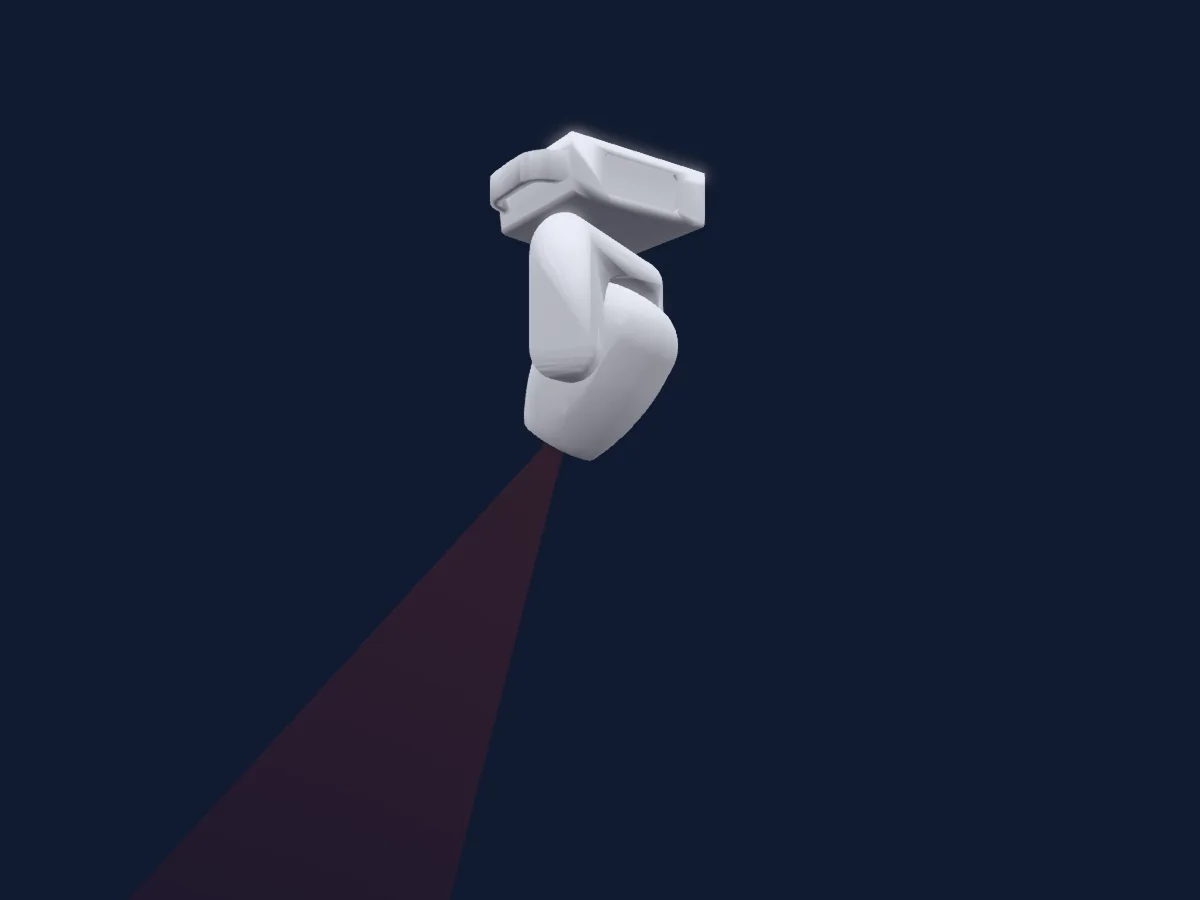
O que ele faz
- Foco
- Frost
- Prisma
- Rotação do prisma
- Roda de cores
- Strobo
- Dimmer
- Pan e tilt
- Gobos
- Rotação de gobos
Funções relevantes para a segurança: Reset do refletor · Funções de manutenção. Confira como elas se comportam no seu refletor antes de um show.
Modos DMX e tabelas de canais
| Modo | Canais | No HitLight |
|---|---|---|
| Standard | 18 | Pronto no HitLight |
Standard
Pronto no HitLight18 canais DMX · Baixar esta tabela em CSV
| Canal | Função | Padrão | Valores DMX |
|---|---|---|---|
| 1 | Color Wheel | 0 | 18 faixas de valores
|
| 2 | Shutter / Strobe | 252 | 11 faixas de valores
|
| 3 | Dimmer | 0 | 2 faixas de valores
|
| 4 | Dimmer Fine | 0 | Byte fino de Dimmer |
| 5 | Gobo | 0 | 18 faixas de valores
|
| 6 | Gobo Rotation | 0 | 5 faixas de valores
|
| 7 | Gobo Rotation Fine | 0 | Byte fino de Gobo Rotation |
| 8 | Prism | 0 | 2 faixas de valores
|
| 9 | Prism Rotation | 0 | 5 faixas de valores
|
| 10 | Frost1 | 0 | 2 faixas de valores
|
| 11 | Focus | 0 | 0–255 |
| 12 | Zoom | 128 | 3 faixas de valores
|
| 13 | Pan | 128 | 0–255 |
| 14 | Pan Fine | 0 | Byte fino de Pan |
| 15 | Tilt | 127 | 0–255 |
| 16 | Tilt Fine | 255 | Byte fino de Tilt |
| 17 | Fixture Global Reset | 0 | 4 faixas de valores
|
| 18 | Function | 0 | 28 faixas de valores
|
Usar Clay Paky Mini-B Spot no HitLight
- Abra Adicionar refletor e procure Clay Paky Mini-B Spot.
- Escolha o modo DMX configurado no menu do próprio refletor. O HitLight atribui a ele o menor endereço inicial livre do universo que comporta a quantidade de canais do modo.
- Confira o modo e os controles no seu refletor real antes de usar ao vivo.
Espaços com Clay Paky Mini-B Spot
As suas montagens guardadas incluem este modelo de aparelho. Confirme o equipamento atual com o espaço.
- La Gravière Les Acacias-Genève, Suíça
- Государственный академический центральный театр кукол имени С.В. Образцова Москва, Rússia
Refletores relacionados
Moving head
Clay Paky Mythos
30 / 33 / 34 canais DMX
Moving head
Clay Paky Mini-B Aqua
17 / 21 / 29 canais DMX
Moving head
Clay Paky MIni-B WW
17 / 21 / 29 canais DMX
Moving head
Clay Paky Midi-B
17 / 21 / 25 / 37 canais DMX
Moving head
Clay Paky HY B-EYE K25 TEATRO
21 / 22 / 35 / 36 / 111 / 148 canais DMX
Moving head
Clay Paky Volero Cube
1 / 4 / 22 / 25 / 41 / 43 / 45 / 50 canais DMX
As tabelas vêm da descrição GDTF do refletor, convertida para a biblioteca do HitLight. O HitLight não tem vínculo com a Clay Paky.