 HitLight
Clay Paky Axcor Profile 1000 ST
Tableau DMX, 1 mode DMX et aperçu 3D. 41 canaux DMX.
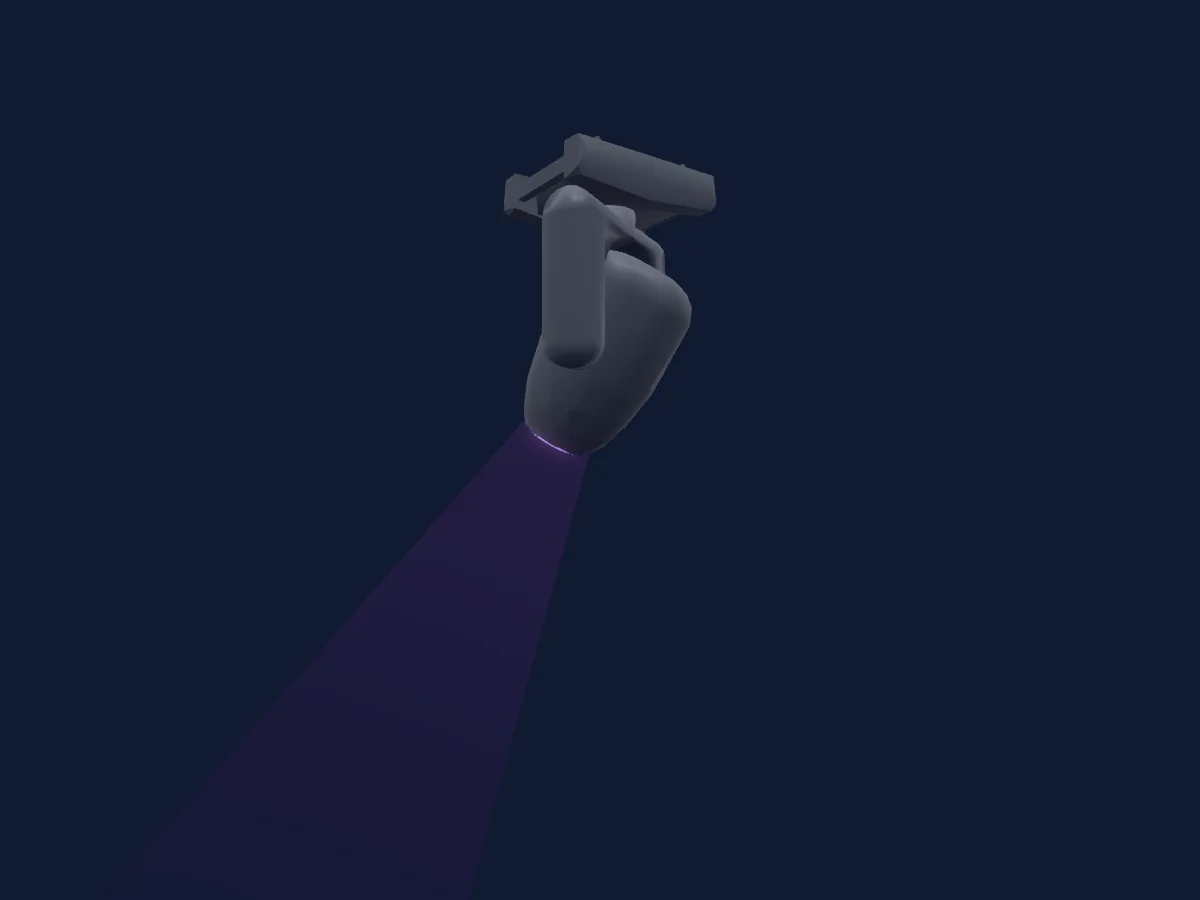
Ce qu’il sait faire
- Mise au point
- Frost
- Iris
- Prisme
- Rotation du prisme
- Zoom
- Mélange de couleurs CMJ
- Température de couleur
- Roue de couleurs
- Stroboscope
- Intensité
- Gobos
- Rotation des gobos
Fonctions liées à la sécurité: Réinitialisation du projecteur. Vérifiez leur comportement sur votre propre projecteur avant un spectacle.
Modes DMX et tableaux de canaux
| Mode | Canaux | Dans HitLight |
|---|---|---|
| 41 DMX | 41 | Prêt dans HitLight |
41 DMX
Prêt dans HitLight41 canaux DMX · Télécharger ce tableau en CSV
| Canal | Fonction | Par défaut | Valeurs DMX |
|---|---|---|---|
| 1 | Cyan | 0 | 0–255 |
| 2 | Magenta | 0 | 0–255 |
| 3 | Yellow | 0 | 0–255 |
| 4 | C TO | 0 | 0–255 |
| 5 | Color Wheel | 0 | 16 plages de valeurs
|
| 6 | Shutter / Strobe | 255 | 19 plages de valeurs
|
| 7 | Dimmer | 0 | 2 plages de valeurs
|
| 8 | Dimmer Fine | 0 | Octet fin de Dimmer |
| 9 | Iris | 0 | 0–255 |
| 10 | Gobo | 0 | 23 plages de valeurs
|
| 11 | Gobo 2 | 0 | 19 plages de valeurs
|
| 12 | Gobo Rotation | 0 | 8 plages de valeurs
|
| 13 | Gobo Rotation Fine | 0 | Octet fin de Gobo Rotation |
| 14 | Prism | 0 | 2 plages de valeurs
|
| 15 | Prism Rotation | 192 | 12 plages de valeurs
|
| 16 | Effect Entry | 0 | 2 plages de valeurs
|
| 17 | Gobo1Select Effects | 0 | 4 plages de valeurs
|
| 18 | Frost1 | 0 | 2 plages de valeurs
|
| 19 | C RIMode | 0 | 2 plages de valeurs
|
| 20 | Focus | 128 | 0–255 |
| 21 | Focus Fine | 0 | Octet fin de Focus |
| 22 | Zoom | 127 | 2 plages de valeurs
|
| 23 | Zoom Fine | 255 | Octet fin de Zoom |
| 24 | Blade1A | 0 | 0–255 |
| 25 | Blade1B | 0 | 0–255 |
| 26 | Blade2A | 0 | 0–255 |
| 27 | Blade2B | 0 | 0–255 |
| 28 | Blade3A | 0 | 0–255 |
| 29 | Blade3B | 0 | 0–255 |
| 30 | Blade4A | 0 | 0–255 |
| 31 | Blade4B | 0 | 0–255 |
| 32 | Shaper Rot | 128 | 7 plages de valeurs
|
| 33 | Frame Macro | 0 | 0–255 |
| 34 | Macro Speed | 0 | 0–255 |
| 35 | Pan | 128 | 0–255 |
| 36 | Pan Fine | 0 | Octet fin de Pan |
| 37 | Tilt | 128 | 0–255 |
| 38 | Tilt Fine | 0 | Octet fin de Tilt |
| 39 | Reset | 0 | 4 plages de valeurs
|
| 40 | Function | 0 | 3 plages de valeurs
|
| 41 | Tint | 0 | 0–255 |
Utiliser Clay Paky Axcor Profile 1000 ST dans HitLight
- Ouvrez Ajouter un projecteur et recherchez Clay Paky Axcor Profile 1000 ST.
- Choisissez le mode DMX réglé dans le menu du projecteur. HitLight lui attribue la plus basse adresse de départ libre de son univers qui peut accueillir le nombre de canaux du mode.
- Vérifiez le mode et les commandes sur votre vrai projecteur avant toute utilisation en direct.
Projecteurs associés
Découpe
Clay Paky Alpha Spot 1200
20 canaux DMX
Découpe
Clay Paky Alpha Spot QWO 800
32 canaux DMX
Découpe
Clay Paky Alpha Beam 1500
24 / 28 canaux DMX
Découpe
Clay Paky Axcor Spot 400
28 canaux DMX
Découpe
Clay Paky Axcor Profile 400 HC
36 canaux DMX

Découpe
Clay Paky Arolla Profile MP
37 canaux DMX
Les tableaux proviennent de la description GDTF du projecteur, convertie pour la bibliothèque HitLight. HitLight n’a aucun lien avec Clay Paky.