 HitLight
Clay Paky Axcor Profile 1000 ST
Tabela DMX, 1 modo DMX e prévia em 3D. 41 canais DMX.
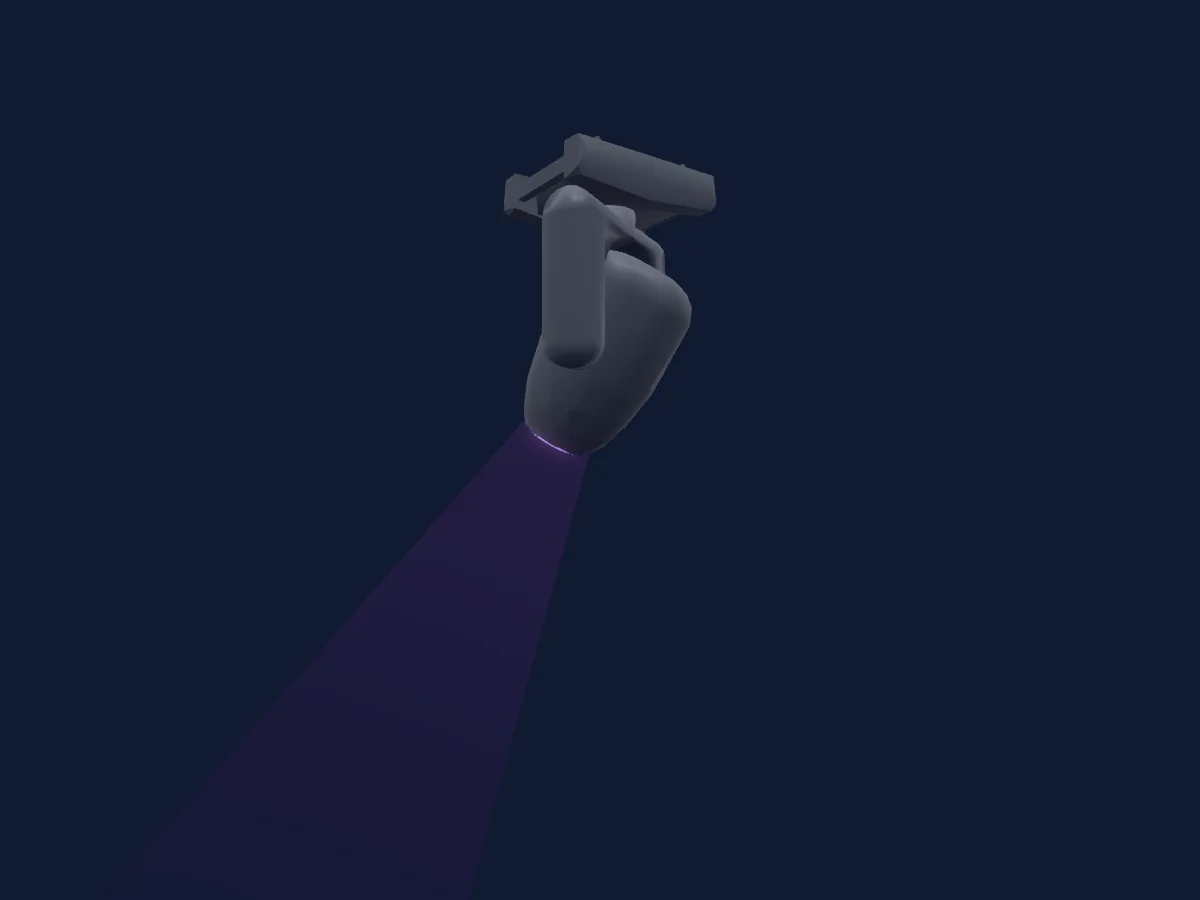
O que ele faz
- Foco
- Frost
- Íris
- Prisma
- Rotação do prisma
- Zoom
- Mistura de cores CMY
- Temperatura de cor
- Roda de cores
- Strobo
- Dimmer
- Gobos
- Rotação de gobos
Funções relevantes para a segurança: Reset do refletor. Confira como elas se comportam no seu refletor antes de um show.
Modos DMX e tabelas de canais
| Modo | Canais | No HitLight |
|---|---|---|
| 41 DMX | 41 | Pronto no HitLight |
41 DMX
Pronto no HitLight41 canais DMX · Baixar esta tabela em CSV
| Canal | Função | Padrão | Valores DMX |
|---|---|---|---|
| 1 | Cyan | 0 | 0–255 |
| 2 | Magenta | 0 | 0–255 |
| 3 | Yellow | 0 | 0–255 |
| 4 | C TO | 0 | 0–255 |
| 5 | Color Wheel | 0 | 16 faixas de valores
|
| 6 | Shutter / Strobe | 255 | 19 faixas de valores
|
| 7 | Dimmer | 0 | 2 faixas de valores
|
| 8 | Dimmer Fine | 0 | Byte fino de Dimmer |
| 9 | Iris | 0 | 0–255 |
| 10 | Gobo | 0 | 23 faixas de valores
|
| 11 | Gobo 2 | 0 | 19 faixas de valores
|
| 12 | Gobo Rotation | 0 | 8 faixas de valores
|
| 13 | Gobo Rotation Fine | 0 | Byte fino de Gobo Rotation |
| 14 | Prism | 0 | 2 faixas de valores
|
| 15 | Prism Rotation | 192 | 12 faixas de valores
|
| 16 | Effect Entry | 0 | 2 faixas de valores
|
| 17 | Gobo1Select Effects | 0 | 4 faixas de valores
|
| 18 | Frost1 | 0 | 2 faixas de valores
|
| 19 | C RIMode | 0 | 2 faixas de valores
|
| 20 | Focus | 128 | 0–255 |
| 21 | Focus Fine | 0 | Byte fino de Focus |
| 22 | Zoom | 127 | 2 faixas de valores
|
| 23 | Zoom Fine | 255 | Byte fino de Zoom |
| 24 | Blade1A | 0 | 0–255 |
| 25 | Blade1B | 0 | 0–255 |
| 26 | Blade2A | 0 | 0–255 |
| 27 | Blade2B | 0 | 0–255 |
| 28 | Blade3A | 0 | 0–255 |
| 29 | Blade3B | 0 | 0–255 |
| 30 | Blade4A | 0 | 0–255 |
| 31 | Blade4B | 0 | 0–255 |
| 32 | Shaper Rot | 128 | 7 faixas de valores
|
| 33 | Frame Macro | 0 | 0–255 |
| 34 | Macro Speed | 0 | 0–255 |
| 35 | Pan | 128 | 0–255 |
| 36 | Pan Fine | 0 | Byte fino de Pan |
| 37 | Tilt | 128 | 0–255 |
| 38 | Tilt Fine | 0 | Byte fino de Tilt |
| 39 | Reset | 0 | 4 faixas de valores
|
| 40 | Function | 0 | 3 faixas de valores
|
| 41 | Tint | 0 | 0–255 |
Usar Clay Paky Axcor Profile 1000 ST no HitLight
- Abra Adicionar refletor e procure Clay Paky Axcor Profile 1000 ST.
- Escolha o modo DMX configurado no menu do próprio refletor. O HitLight atribui a ele o menor endereço inicial livre do universo que comporta a quantidade de canais do modo.
- Confira o modo e os controles no seu refletor real antes de usar ao vivo.
Refletores relacionados
Elipsoidal
Clay Paky Alpha Spot 1200
20 canais DMX
Elipsoidal
Clay Paky Alpha Spot QWO 800
32 canais DMX
Elipsoidal
Clay Paky Alpha Beam 1500
24 / 28 canais DMX
Elipsoidal
Clay Paky Axcor Spot 400
28 canais DMX
Elipsoidal
Clay Paky Axcor Profile 400 HC
36 canais DMX

Elipsoidal
Clay Paky Arolla Profile MP
37 canais DMX
As tabelas vêm da descrição GDTF do refletor, convertida para a biblioteca do HitLight. O HitLight não tem vínculo com a Clay Paky.